
It was a sleepy afternoon in the hill town. The sun had softened as warm yolk, the wind moved through the pines like the low, sweet note of a flute, carrying their scent along with it, and the marketplace dozed in a lazy hum.
That’s when Pihu heard it—tap… tap… tap—a steady sound that seemed to rise above the silence. She followed it past the spice seller, past the sweet shop, until she reached a little workshop tucked between two old houses.
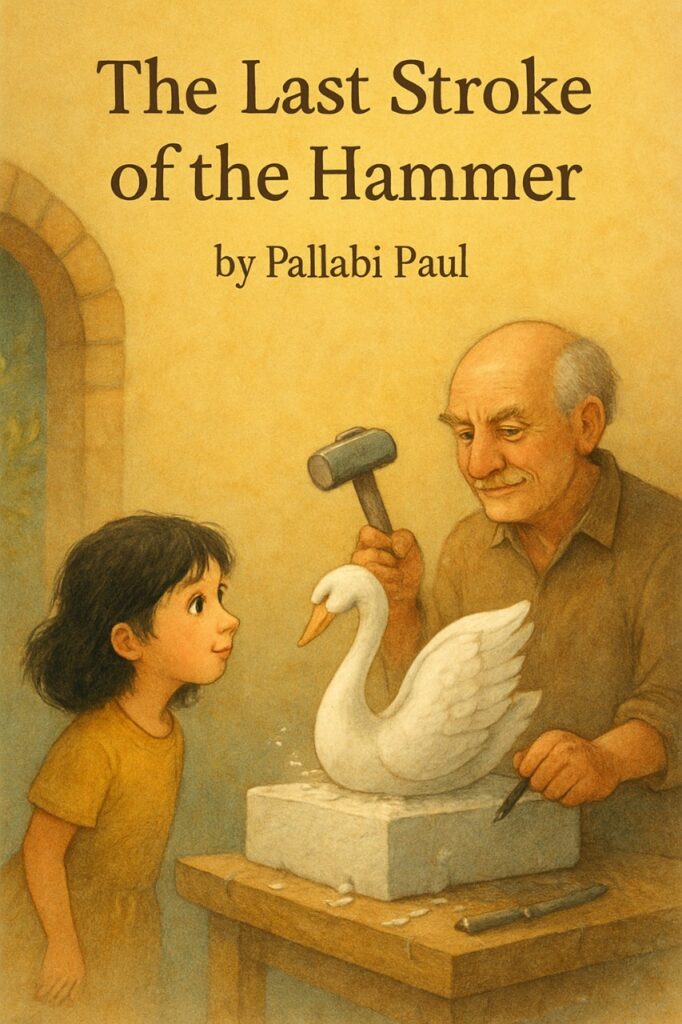
Inside, an old sculptor stood before a block of white stone, his hammer and chisel moving with unhurried rhythm. Dust floated in the twilight like talcum powder.
The stone looked the same no matter how many times he struck it. “Kaka (Uncle),” Pihu asked, “why are you keep hitting it when nothing changes?”The sculptor’s eyes crinkled in a smile. “Every stroke counts, beta (child). Even if you can’t see it yet.”
It was a sleepy afternoon in the hill town. The sun had softened as warm yolk, the wind moved through the pines like the low, sweet note of a flute, carrying their scent along with it, and the marketplace dozed in a lazy hum.That’s when Pihu heard it—tap… tap… tap—a steady sound that seemed to rise above the silence. She followed it past the spice seller, past the sweet shop, until she reached a little workshop tucked between two old houses.Inside, an old sculptor stood before a block of white stone, his hammer and chisel moving with unhurried rhythm. Dust floated in the twilight like talcum powder.
She returned day after day. Sometimes he tapped gently, sometimes with force. Then one afternoon, he lifted his hammer, struck once more, and a final shard fell away.A white marble swan emerged—neck curved, wings poised to take flight.“Wow, Kaka! That last stroke made it appear!” she whispered.
The sculptor shook his head. “No, beta. Without the first stroke—and all the ones in between—the last would mean nothing. The swan was here all along. The strokes simply set it free.”
That night, Pihu thought of all the times she had quit too soon—when the skipping rope tangled, or her handwriting wobbled. She decided never to stop before her “last stroke” arrived. She began sketching daily. Slowly, her lines grew sure, her pages filled with beauty.
The Moral for Life & Work:
Success is rarely the result of one grand effort. It’s built from small, steady actions that no one applauds in the moment. In our careers, every email answered well, every skill improved, every follow-up made, is a stroke on the stone.When the “last stroke” comes—a big promotion, a major win—it’s only because of the quiet, consistent work before it.
So, keep striking. Even when progress feels invisible, trust that each effort shapes the masterpiece waiting inside you.
Copyright: Pallabi Paul